
Custom Website vs Website Builder: Which Is the Right Choice for Your Business?
Not every business requires a fully custom website, and not every website builder is...
In Part 1 of this series, we explored the fundamentals of generator telemetry, the role of Remote Management Systems (RMS), and how intelligent monitoring is transforming the way organizations manage industrial power assets. We established that modern generators are capable of providing real-time operational data—but understanding the technology is only the beginning. The real value lies in knowing how these systems are designed, connected, and deployed in real-world environments.
Implementing a successful generator remote monitoring solution is a multidisciplinary process that combines electrical engineering, industrial automation, telecommunications, cloud computing, and data management. It is not simply a matter of connecting a device to a generator. Every deployment requires careful consideration of the generator’s existing control system, communication capabilities, network infrastructure, operational requirements, and long-term maintenance objectives.
Whether an organization is installing telemetry on a newly commissioned industrial generator or upgrading a fleet of older machines, the same objective remains: transforming standalone equipment into intelligent, connected assets that provide continuous operational visibility. When correctly implemented, a Remote Management System enables maintenance teams to monitor equipment health remotely, detect developing faults before they become failures, optimize maintenance schedules, reduce unnecessary site visits, improve fuel accountability, and make informed operational decisions based on real-time data rather than assumptions.
However, one of the biggest misconceptions surrounding generator remote monitoring is the belief that purchasing a telemetry-ready generator automatically provides cloud-based monitoring capabilities. In reality, telemetry-ready simply means the generator has been designed with the necessary digital infrastructure to communicate with external monitoring systems. Additional hardware, communication interfaces, configuration, and software integration are still required before data can be securely transmitted to engineers, facility managers, or operations teams.
This article takes a practical look at that implementation journey. We’ll examine the digital controller that acts as the generator’s intelligence center, the communication interfaces that allow devices to exchange information, the telemetry gateways responsible for transmitting data to the cloud, and the retrofit techniques that enable older generators to participate in modern Remote Management Systems. By understanding how these components work together, organizations can make more informed decisions when planning generator monitoring projects and selecting technologies that align with their operational goals.
Every successful Remote Management System begins with one critical component: the generator controller. Often referred to as the generator’s brain, this embedded industrial computer is responsible for far more than simply starting or stopping an engine. It serves as the central intelligence layer that continuously monitors, interprets, and manages every critical aspect of generator operation, making remote monitoring possible.
Modern industrial generators contain dozens of sensors distributed throughout the engine, alternator, fuel system, cooling system, battery circuit, and electrical output stage. These sensors constantly produce electrical signals representing parameters such as oil pressure, coolant temperature, engine speed (RPM), battery voltage, fuel level, output frequency, electrical load, and alternator voltage. On their own, these raw signals have very little value—they must first be processed, validated, and organized before they can be used for monitoring or decision-making.
This responsibility belongs entirely to the generator controller. Acting as an industrial-grade microcomputer, the controller continuously collects sensor inputs, converts analogue measurements into digital values where necessary, performs safety and operational calculations, detects abnormal operating conditions, records event histories, manages alarms, and controls automated functions such as engine starting, synchronization, shutdown sequences, and Automatic Mains Failure (AMF) operations. Every second, it is analysing thousands of data points to ensure the generator operates safely and efficiently.
Beyond operational control, the controller also functions as a data management system. Instead of simply displaying values on an LCD screen, it stores operational information inside structured memory locations known as registers. These registers organize data into standardized formats that external devices can read using industrial communication protocols such as Modbus RTU, CAN Bus (J1939), or Modbus TCP. This architecture transforms the controller from a local control panel into the primary communication hub for the entire Remote Management System.
Some of the most widely deployed generator controllers include Deep Sea Electronics (DSE) controllers, ComAp InteliGen, Cummins PowerCommand, Caterpillar EMCP, and SmartGen controllers. While each manufacturer offers different capabilities and software environments, they all perform the same essential function: collecting operational intelligence from the generator and making it available for monitoring, diagnostics, automation, and remote management.
Without this digital intelligence layer, a generator remains an isolated mechanical machine that can only be inspected locally. With it, the same generator becomes a connected industrial asset capable of communicating with cloud platforms, supporting predictive maintenance strategies, enabling remote diagnostics, and integrating seamlessly into wider Industrial Internet of Things (IIoT) ecosystems. In many ways, the controller is not simply the brain of the generator—it is the foundation upon which every modern Remote Management System is built.
While the generator controller serves as the intelligence centre of the system, it cannot communicate directly with cloud platforms or mobile applications on its own. Instead, it is designed with dedicated industrial communication interfaces that allow external devices to securely retrieve operational data without interfering with the generator’s primary control functions.
These communication interfaces act as access points into the controller’s digital memory. Every operational parameter—from engine speed and coolant temperature to fuel level, battery voltage, operating hours, and fault codes—is stored in predefined memory registers. External telemetry gateways periodically read these registers using standardized industrial communication protocols, ensuring that the generator’s operational status is always available without interrupting its normal operation.
Most modern industrial generators provide communication interfaces such as RS485, CAN Bus (J1939), Modbus RTU, or Modbus TCP, depending on the manufacturer and controller model. These technologies were specifically developed for industrial environments where electrical interference, vibration, long cable distances, and harsh operating conditions make conventional communication methods unreliable. Their robust design ensures accurate and stable data transmission even in demanding environments such as manufacturing plants, oil and gas facilities, construction sites, hospitals, telecommunications towers, and mining operations.
The telemetry gateway connects directly to one of these communication interfaces and acts as a translator between the generator and the cloud. It continuously polls the controller for operational data, converts the information into a secure digital format, and transmits it through a cellular or internet connection to a remote monitoring platform. This process happens automatically, often within seconds, allowing engineers and operations teams to view live generator performance, receive fault notifications, analyse historical trends, and even execute approved remote commands without being physically present at the site.
This layered communication architecture is one of the key reasons Remote Management Systems are both reliable and scalable. Instead of replacing the generator’s existing control system, telemetry solutions work alongside it, leveraging the controller’s built-in intelligence while adding secure connectivity, centralized monitoring, and advanced analytics. The result is a modern power management solution that combines operational reliability with the flexibility of cloud-based technology.
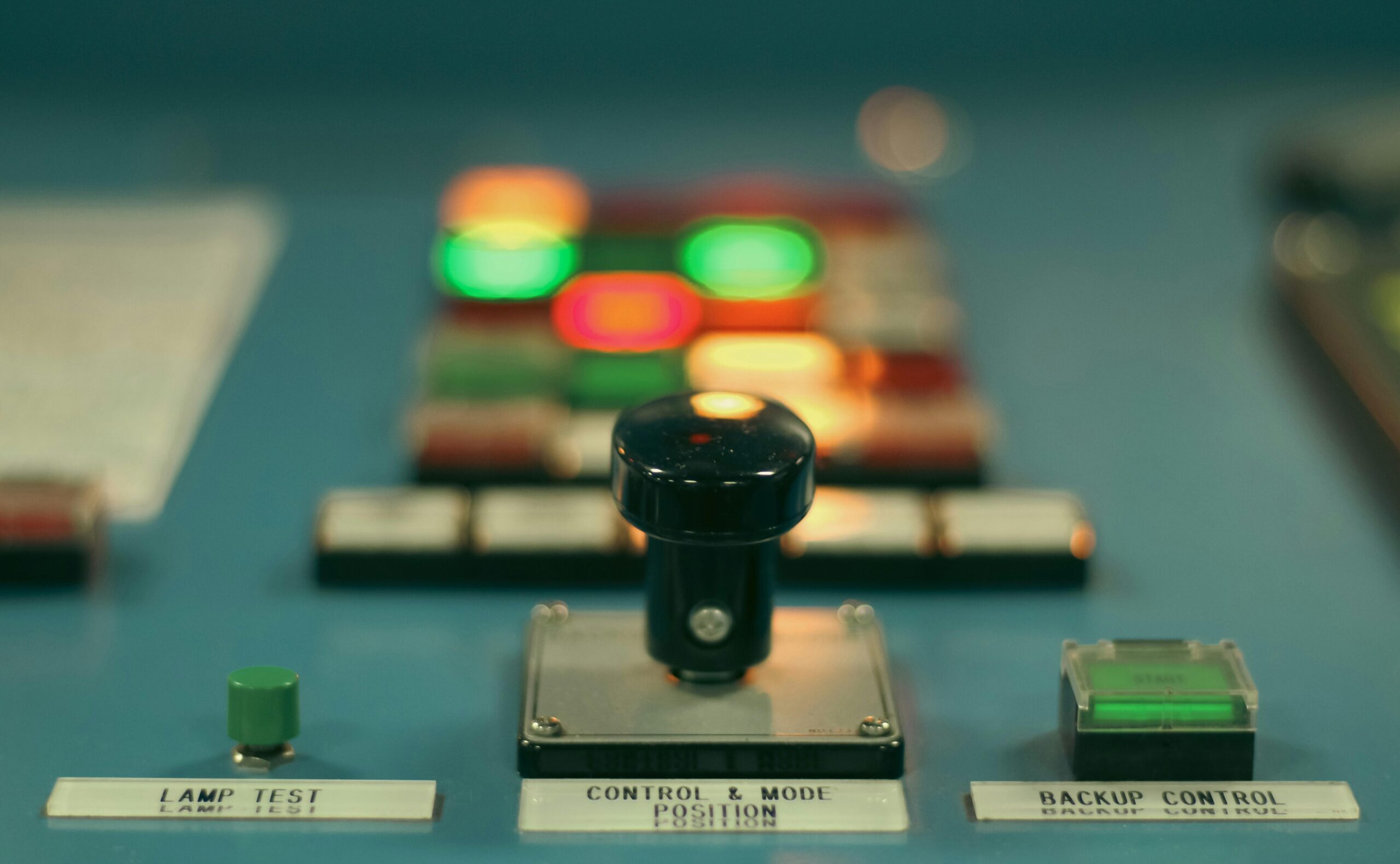
A Remote Management System only becomes operational after the telemetry hardware is physically integrated with the generator. While the exact installation process varies depending on the generator manufacturer, controller model, and monitoring platform, the overall architecture follows a well-established engineering approach designed to ensure reliable data collection without affecting the generator’s primary operating functions.
The installation typically begins by identifying the communication interface available on the generator controller. Controllers such as Deep Sea Electronics (DSE), Cummins PowerCommand, Caterpillar EMCP, ComAp, and SmartGen are manufactured with dedicated communication terminals that allow external devices to exchange information with the controller. These terminals commonly support industrial protocols such as RS485, CAN Bus (J1939), or Ethernet, depending on the controller model and the capabilities required.
Once the appropriate interface has been identified, the telemetry gateway is mounted inside the generator enclosure or Automatic Transfer Switch (ATS) panel, where it remains protected from environmental conditions while maintaining easy access for maintenance. A shielded communication cable is then connected between the controller and the gateway, creating a secure pathway through which operational data can flow continuously.
In addition to the communication link, the telemetry gateway requires a reliable power source. Most industrial gateways are connected directly to the generator’s 12V or 24V starter battery so they remain operational even when the generator is switched off. This ensures the device can continue reporting battery health, security events, and generator status while waiting for the next startup cycle.
Once powered, the gateway is configured with the correct communication parameters for the generator controller, including the communication protocol, device address, baud rate, and register mapping profile. These settings allow the gateway to correctly interpret the data being transmitted by the controller and convert it into meaningful information that can be displayed on remote dashboards. A properly configured installation enables operators to monitor generator health, receive instant alarms, review historical performance, and remotely manage assets with confidence.
“By giving our devices a brain, we make it easy to tailor telemetry to the application. Scripting allows mathematical manipulation and combining of data to produce real insights rather than just raw numbers.”
Telemetry Systems Engineer at Senquip Telemetry
Installing telemetry hardware is only one part of the implementation process. The real intelligence of a Remote Management System lies in how operational data travels from the generator to engineers, facility managers, and decision-makers in real time. Behind every dashboard displaying fuel levels, engine hours, alarms, and performance metrics is a carefully orchestrated communication architecture that continuously collects, processes, and delivers information from the field.
The journey begins inside the generator itself. As the engine operates, sensors constantly monitor critical parameters such as oil pressure, coolant temperature, engine RPM, battery voltage, output frequency, fuel level, and electrical load. These measurements are transmitted to the generator controller, where they are validated, processed, and stored in structured memory registers. Rather than sending raw electrical signals directly to the cloud, the controller converts them into standardized digital values that external systems can interpret consistently.
The telemetry gateway then takes over as the communication bridge between the generator and the outside world. Acting as the Modbus Master, it periodically polls the controller through interfaces such as RS485 or CAN Bus, requesting information from predefined memory registers. Each request retrieves specific operational values, fault codes, runtime statistics, maintenance counters, and event logs. The gateway interprets these responses, packages the information into secure digital messages, and prepares it for transmission across the available communication network.
Depending on the deployment environment, data is transmitted through 4G/LTE cellular networks, Ethernet, Wi-Fi, or even satellite communication for remote locations where conventional network infrastructure is unavailable. Modern telemetry gateways encrypt this information before transmission using secure communication protocols, ensuring that sensitive operational data remains protected while travelling to cloud servers.
Once the information reaches the cloud platform, it is processed, stored, and transformed into meaningful dashboards that operators can access from virtually anywhere. Instead of viewing raw register values, users see live fuel levels, operating hours, engine health indicators, maintenance reminders, alarm notifications, historical performance trends, and geographical asset locations through intuitive web portals and mobile applications. Many platforms also generate automated reports, email alerts, SMS notifications, and maintenance recommendations, allowing organizations to respond to operational issues before they escalate into costly failures.
This seamless flow—from sensor to controller, controller to gateway, gateway to the cloud, and finally to the user—forms the backbone of every modern Remote Management System. It enables organizations to replace reactive maintenance with proactive asset management, providing the visibility needed to improve equipment reliability, reduce operational costs, strengthen fuel accountability, and make faster, data-driven decisions across their entire generator fleet.
Not every generator currently in operation was manufactured with remote monitoring capabilities. Across industries such as banking, healthcare, telecommunications, manufacturing, hospitality, construction, and commercial real estate, thousands of older generators continue to provide reliable backup power despite lacking the digital infrastructure required for modern Remote Management Systems. Fortunately, replacing these generators is often unnecessary. Through professional retrofitting, many conventional generators can be upgraded to deliver intelligent monitoring, automated reporting, and remote operational visibility.
The first step in any retrofit project is determining the generator’s existing level of digital capability. Some generators already include a programmable digital controller but lack a telemetry gateway, making the upgrade relatively straightforward. In these cases, engineers simply integrate a compatible telemetry device, configure the communication interface, and connect the system to a cloud monitoring platform.
Older generators present a different challenge. Many legacy diesel generators rely entirely on analogue gauges, mechanical switches, and manual key-start systems. These machines have no digital memory, communication ports, or standardized data registers, meaning there is no existing source from which operational data can be extracted. Rather than reading information from a controller, engineers must create a new digital monitoring architecture around the generator.
One common retrofit approach involves replacing the existing analogue control panel with a modern intelligent controller such as a Deep Sea Electronics (DSE), ComAp, or SmartGen controller. This process is often described as giving the generator a new “brain.” Every critical circuit—including engine start, fuel solenoid control, oil pressure monitoring, coolant temperature protection, charging alternator feedback, emergency shutdowns, and alarm outputs—is rewired into the new controller. Once commissioned, the controller continuously processes engine information and provides the digital communication interfaces required for telemetry integration.
Where complete controller replacement is not practical or cost-effective, engineers may instead deploy an advanced telemetry gateway equipped with analogue and digital input channels. Instead of communicating through a controller, the gateway reads information directly from strategically installed sensors. Fuel level probes, current transformers (CTs), battery voltage inputs, engine run signals, oil pressure switches, coolant temperature switches, and relay outputs can all be connected directly to the gateway. Although this method typically provides fewer diagnostic capabilities than a fully digital controller, it still delivers valuable operational insights such as runtime tracking, fuel monitoring, maintenance scheduling, power consumption, and alarm notifications.
The choice between these retrofit approaches depends on several factors, including the generator’s age, controller compatibility, operational requirements, available budget, and the level of monitoring the organization expects to achieve. A properly engineered retrofit not only extends the useful life of existing generator assets but also enables businesses to adopt modern Remote Management Systems without the significant capital expenditure associated with replacing entire generator fleets.
Successfully implementing a Remote Management System extends far beyond installing a telemetry gateway or connecting communication cables. The true effectiveness of an RMS depends on careful planning, proper system integration, accurate sensor calibration, and ongoing operational optimization. Every component within the monitoring architecture must work together seamlessly to ensure that the data reaching engineers and facility managers is both accurate and actionable.
One of the first considerations during deployment is selecting hardware that is fully compatible with the generator’s controller. Different manufacturers—including Deep Sea Electronics (DSE), ComAp, Cummins PowerCommand, Caterpillar EMCP, and SmartGen—utilize different communication protocols, register structures, and configuration methods. Ensuring compatibility between the controller and the telemetry gateway eliminates communication errors and guarantees that operational data such as engine runtime, fuel consumption, fault history, electrical load, and maintenance counters are interpreted correctly.
Reliable communication infrastructure is equally important. Industrial generators operate in diverse environments ranging from manufacturing plants and commercial buildings to telecom towers, hospitals, mining sites, and remote utility installations. Selecting the appropriate communication medium—whether 4G/LTE, Ethernet, or a hybrid solution—helps maintain uninterrupted data transmission even under challenging operating conditions. Proper antenna positioning, stable power supply to the telemetry gateway, and consistent network availability all contribute significantly to long-term monitoring reliability.
Sensor calibration is another critical phase that directly influences the quality of monitoring data. Fuel level sensors must be calibrated to the dimensions of the generator’s tank, Current Transformers (CTs) must accurately reflect electrical load, and communication registers must be mapped correctly to the controller. During commissioning, engineers validate each parameter against the generator’s actual operating conditions to ensure that cloud dashboards display precise and meaningful information. Without proper calibration, even the most advanced monitoring platform can produce inaccurate readings that affect operational decisions.
Scalability should also be considered from the outset. While many organizations begin by monitoring a single generator, operational requirements often expand over time. Modern Remote Management Systems should be capable of supporting multiple generators, Automatic Transfer Switches (ATS), fuel storage tanks, battery systems, solar energy assets, and additional field equipment through a centralized monitoring platform. Designing with future expansion in mind allows businesses to grow their monitoring infrastructure without replacing their existing investment.
Ultimately, a successful RMS deployment is measured not by the number of devices installed, but by the reliability of the information it provides. When controllers, sensors, telemetry gateways, communication networks, and cloud platforms are correctly integrated, organizations gain continuous visibility into their power infrastructure, enabling proactive maintenance, improved operational efficiency, reduced downtime, and more informed decision-making across every monitored asset.
As industrial operations continue to evolve, Remote Management Systems are rapidly becoming an essential component of modern power infrastructure rather than an optional enhancement. Organizations are moving beyond simply generating backup power—they are investing in intelligent monitoring solutions that provide complete visibility into equipment performance, fuel consumption, maintenance schedules, and operational efficiency. The ability to transform raw generator data into meaningful business intelligence enables organizations to reduce downtime, optimize maintenance planning, improve asset utilization, and make faster, data-driven decisions across multiple facilities.
Whether implementing telemetry on a newly commissioned industrial generator or retrofitting an existing fleet, the success of any Remote Management System depends on selecting the right technologies, integrating compatible hardware, configuring reliable communication channels, and deploying a monitoring platform that aligns with long-term operational objectives. A well-designed RMS should not only deliver real-time visibility today but also provide the flexibility to scale as business operations, infrastructure, and energy requirements continue to grow.
This is where having the right technology partner becomes invaluable. At Rage Technology, we believe technology should do more than solve today’s challenges—it should create opportunities for greater efficiency, smarter decision-making, and sustainable business growth. Our team works with organizations to design, customize, integrate, and support technology solutions that improve operational performance while preparing businesses for an increasingly connected future.
Beyond industrial monitoring and intelligent technology integration, Rage Technology delivers a comprehensive range of digital services designed to support modern organizations. Our expertise includes Managed IT Services that keep critical business infrastructure operating efficiently, App & System Customization for building tailored software solutions and operational platforms, Website Design & Customization for creating professional, high-performing digital experiences, Website Maintenance & Support to ensure long-term website reliability and performance, and SEO Optimization & Ranking services that help businesses strengthen their online visibility and reach the right audience.
Whether your organization is exploring Generator Telemetry, planning a Remote Management System (RMS) deployment, modernizing legacy equipment, or investing in broader digital transformation initiatives, partnering with experienced technology professionals can significantly improve project success. If you’re looking to implement intelligent monitoring solutions or build technology that drives measurable business value, Rage Technology is ready to help you plan, deploy, and support solutions tailored to your operational needs.
Generator telemetry and Remote Management Systems have fundamentally changed how organizations monitor, manage, and maintain their power infrastructure. What was once a reactive process driven by routine inspections and manual record-keeping has evolved into a proactive, data-driven approach that provides continuous visibility into generator performance, fuel consumption, maintenance schedules, and operational health.
Throughout this two-part series, we’ve explored both the foundations and implementation of generator telemetry—from understanding telemetry-ready generators and intelligent controllers to communication interfaces, telemetry gateways, cloud monitoring, and retrofit strategies for legacy equipment. Together, these technologies enable businesses to transform conventional generators into intelligent assets capable of supporting modern operational demands.
As industries continue to embrace automation, Industrial IoT, and connected infrastructure, investing in reliable Remote Management Systems is becoming less of a competitive advantage and more of an operational necessity. Organizations that leverage real-time monitoring are better positioned to reduce downtime, extend equipment lifespan, improve maintenance planning, strengthen fuel management, and make faster, more informed decisions across their operations.
Successfully implementing a Remote Management System requires more than selecting the right hardware—it requires careful planning, system integration, technical expertise, and a clear understanding of how industrial technologies work together. Whether you’re deploying telemetry on a new generator, retrofitting an existing fleet, or planning a large-scale monitoring solution, partnering with an experienced technology provider can make the entire process more efficient and reliable.
At Rage Technology, we’re committed to helping businesses harness technology to improve operational performance and support long-term growth. Whether you’re exploring intelligent monitoring solutions, building custom digital platforms, or modernizing your business infrastructure, our team provides the expertise needed to turn complex technology into practical business solutions.
Our services extend beyond industrial technology to include Managed IT Services, App & System Customization, Website Design & Customization, Website Maintenance & Support, and SEO Optimization & Ranking. By combining technical expertise with business-focused innovation, we help organizations build secure, scalable, and future-ready digital ecosystems that deliver measurable results.
If your organization is considering Generator Telemetry, Remote Management Systems (RMS), or broader digital transformation initiatives, we’d be happy to discuss your requirements and help you identify the right solution for your operational needs. Contact Rage Technology to learn how our team can help you implement smarter technologies that drive greater efficiency, reliability, and business success.
Not every business requires a fully custom website, and not every website builder is...
Generator telemetry is transforming how businesses monitor and manage industrial power systems. Discover how...
Technology should help businesses grow—not create unnecessary costs and disruptions. Discover how Managed IT...
Converting website visitors into customers requires more than traffic alone. Discover how businesses can...
Reliable advanced engineering solutions for secure and scalable digital infrastructure.
© 2026 Rage Technology. All Rights Reserved.